Space science
NASA discovered a 'super Earth' evaporating
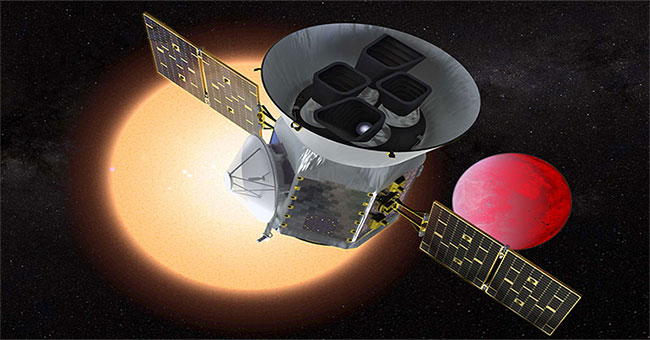
NASA's new planet hunter - TESS satellite - has just found the first alien world in the mission, a super-Earth evaporating in the constellation Son Dung.
Browse ScienceInfo articles and explainers related to Super Earth.
43 published items.
NASA's new planet hunter - TESS satellite - has just found the first alien world in the mission, a super-Earth evaporating in the constellation Son Dung.

US scientists have discovered a super-Earth that orbits a star 40 Eridani A, exactly where in Star Trek, Vulcan's alien planet exists.

The team of scientists from the University of Florida (USA) has just published the research results on the Monthly Report section of the Royal Astronomical Society of En…
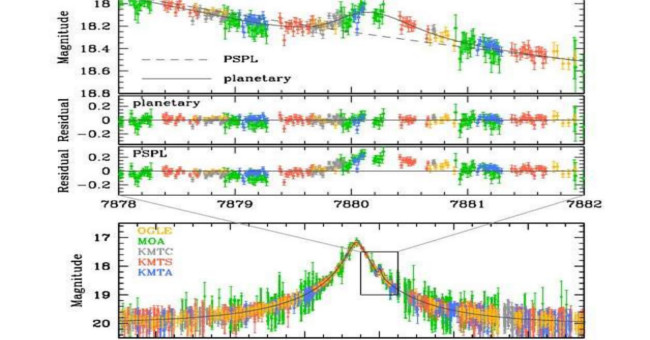
A group of international astronomers discovered one
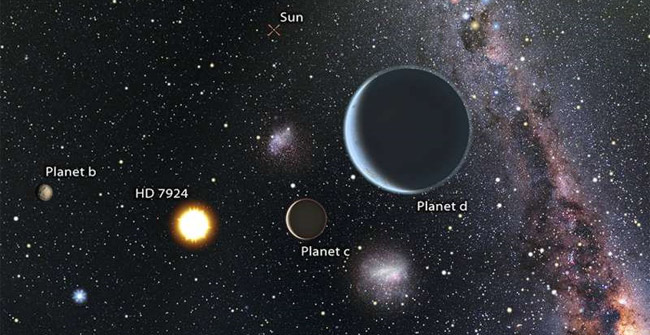
A surprisingly interesting star system found in space surprised the scientific community. The planets orbit around very close to the host star for a period of 1.2, 3.6 a…
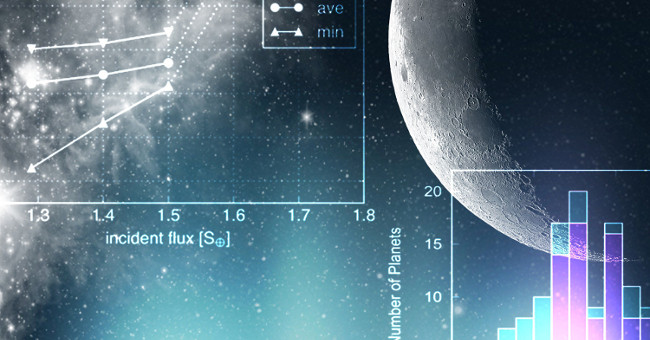
The new study was published by the University of Tokyo Institute of Technology (Japan). The newly discovered planets revolve around some small red dwarfs near Earth.

This star has a radius of about 58% compared to our Sun, the mass occupies 65% of the sun, and has at least three

An exoplanet at 111 light-years away could be a large version of the Earth with conditions suitable for life.
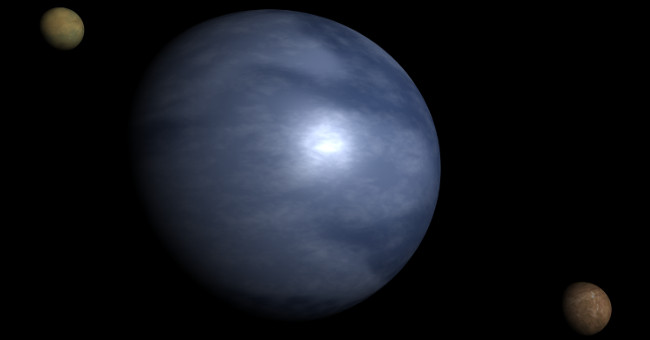
NASA's Kepler planet-hunting telescope has discovered more than 2,300 extrasolar planets in the universe ever.
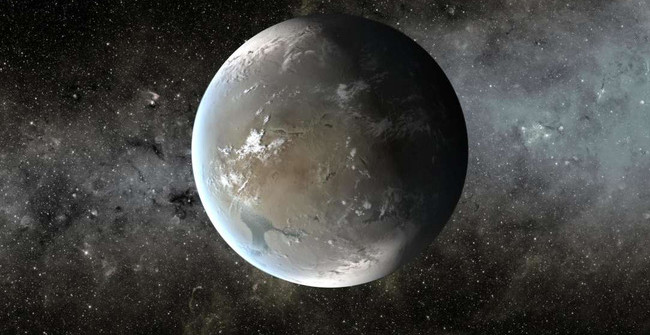
It has been operating since 1990, but recently it can be said that Kepler has had its most important discovery in history.

LHS 1140b giant rock planet concentrates many suitable conditions for life, only 39 light-years from Earth.
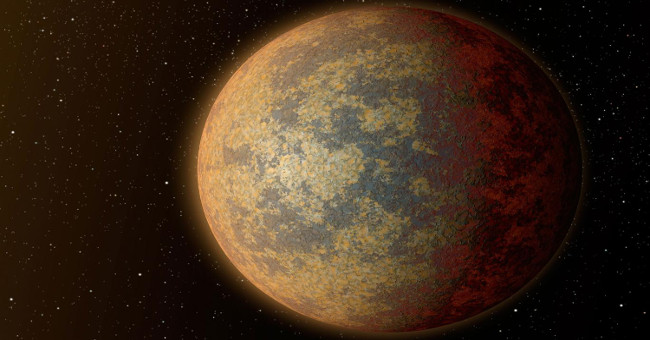
From this finding, scientists predict that all stars near Earth's Sun have natural satellites. Therefore, there exists the possibility of having Earth-like planets with…

Spanish scientists discovered
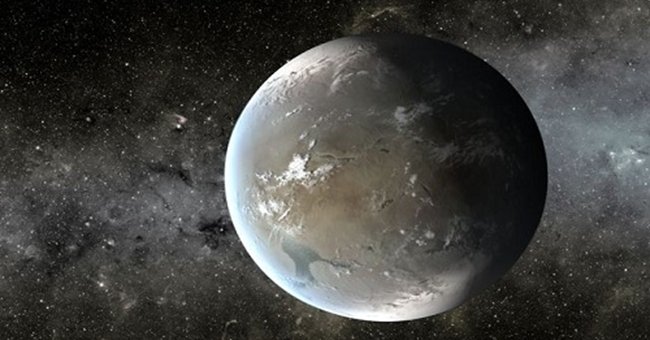
Research by American scientists shows that the conditions on the planet Kepler-62f at 1,200 light-years from Earth are very favorable for development.

The US Aeronautics and Space Administration (NASA) on March 30 drew a heat map on the super-earth 55 Cancri e, showing great thermal fluctuations between the day and nig…